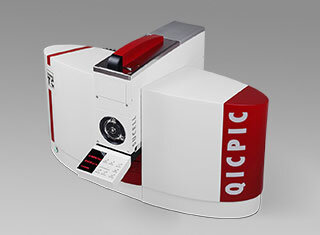




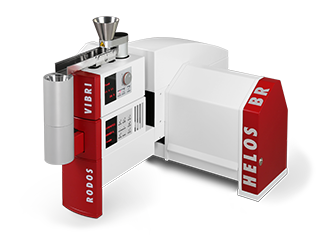





Dynamic image analysis for particle size and shape from 0.5 µm bis 34,000 µm
QICPIC enables rapid, reproducible particle characterisation using dynamic image analysis. During measurement, high resolution images of the particles are captured and analysed to determine their size and shape. This provides detailed size and shape distributions for powders granules, fibres, suspensions and emulsions.
The QICPIC/S generation combines high-resolution 20,4-megapixel camera technology with high frame rates and a large field of view. Four optical measuring ranges, from XS to L, provide the flexibility to accommodate different particle sizes and measurement requirements. Combined with modular dry and wet dispersion systems, QICPIC can be tailored to the sample being analysed.
High resolution for detailed particle imaging
The QICPIC/S generation offers a camera resolution of up to 20.4 megapixels. Combined with precision lenses, this enables detailed imaging of individual particle projections.
The high image resolution allows subtle differences in particle contours to be reliably detected, providing the basis for detailed particle size and shape characterisation.
High frame rates for analysing large numbers of particles
Different frame rates are available depending on the selected camera resolution. At full resolution of 20.4 megapixels, the QICPIC/S06 captures up to 80 frames per second (fps). Reducing the resolution to 1.5 megapixels enables frame rates of up to 950 fps.
Image acquisition can therefore be adapted to the measurement requirements: high resolution for particularly detailed particle imaging, or high frame rates for analysing large numbers of particles within short measurement times.
Large field of view for efficient measurements
The larger camera sensor provides a correspondingly large field of view. This allows more particles to be captured in each image and large particle populations to be analysed efficiently.
Capturing large numbers of particles within short measurement times provides a strong statistical basis for reliably determining particle size and shape distributions.
Flexible optical measuring ranges
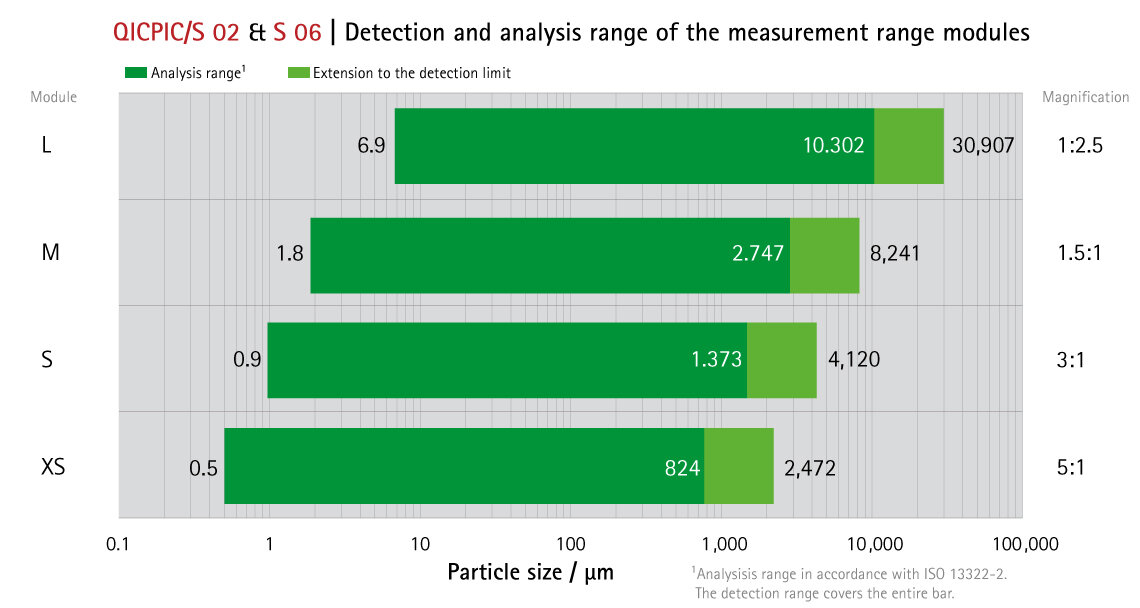
QICPIC offers a choice of optical measuring ranges to suit the particle size and measurement task. Depending on the configuration, a single sensor can incorporate up to four optical measuring ranges. This allows the detection range to be tailored to the sample at optimum resolution.
With its standard measuring ranges XS to L, the QICPIC/S series covers a detection range from 0.5 µm to approximately 31 mm. The proven measuring ranges of the QICPIC/L series can also be integrated as an option, extending the detection range to 34 mm. This maintains compatibility with the existing optical measuring ranges of the QICPIC/L series.
The measuring ranges used depend on the specific QICPIC configuration, the dispersion system and the sample being analysed.
- Camera technology with a resolution of up to 20 megapixels
- Frame rates of up to 950 fps
- Modular system design for different measurement requirements
- Wide selection of dispersion and dosing units for dry and wet samples
- Fast and reliable determination and dosing units for dry and wet samples
- Fast and reliable determination of particle size, shape and count
- Wide measuring range from 0,5 µm to 34mm
- Dynamic image analysis in accordance with ISO 13322-2
- Powerful evaluation modes for meaningful results
- Customisable, high-resolution size and shape distributions
- Statistically robust results based on large numbers of particles
- Analysis of powders, granules, fibres, suspensions and emulsions
Are you interested in additional content? Please register an account. After confirming the registration link brochures, application notes and other documents on particle measurement will be available for download.
Watch the QICPIC teaser video!

To protect your personal data, your connection to the video streaming provider has been blocked. Click to unblock the video streaming provider. By loading the video you accept the video streaming provider’s privacy policy. More information about the video streaming provider’s privacy policy can be found here: Vimeo Privacy Policy
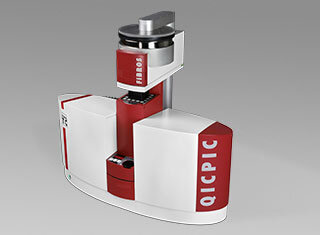
QICPIC/S Series
The QICPIC/S series combines high-resolution dynamic image analysis with high measurement speed and a large field of view. The 20-megapixel sensor and enhanced optics provide detailed images of particle contours, enabling precise determination of size and shape parameters.
The smaller pixel size allows finer structures to be captured. At the same time, the larger sensor provides a larger imaging area, allowing a high number of particles to be recorded in each image. This combines high resolution with a broad statistical basis.
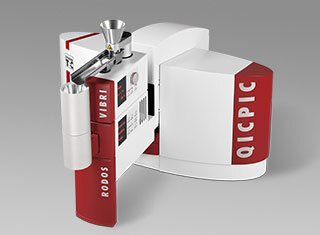
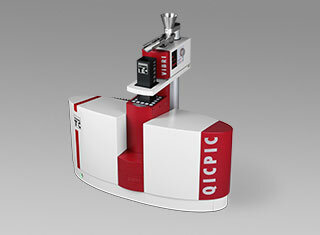
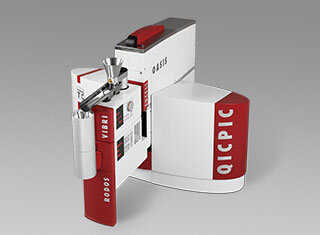
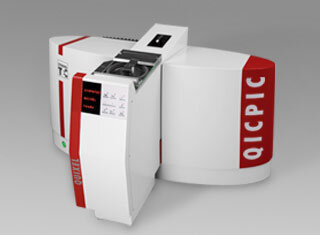
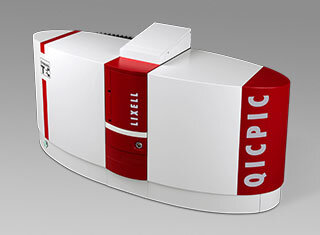
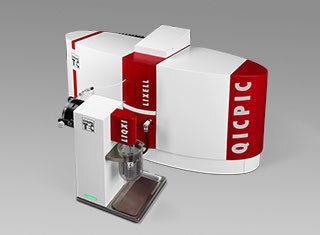
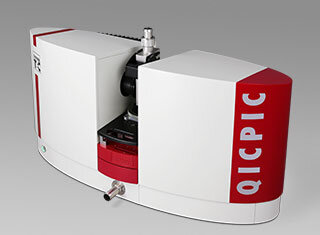
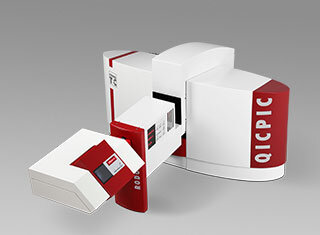
A range of precision lenses is available for different particle sizes and applications. QICPIC/S can be combined with modular dry and wet dispersion systems, including RODOS, GRADIS or FIBROS for dry samples as well as QUIXEL, LIXELL, FLOWCELL and SUCELL for suspensions and emulsions.
The QICPIC/S02 and QICPIC/S06 variants offer different frame rates and data rates depending on the configuration.
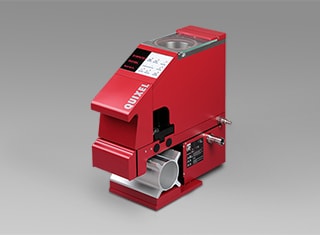
Applying dosing and dispersing units of modular design for dry and wet products the particle sizer QICPIC is flexible to adapt to powders, granules, fibres, suspensions and emulsions. This ensures a product-specific characterization of particle size and particle shape parameters matching the true nature of the application.




Particle size analysis using QICPIC image analysis sensors enables meaningful comparisons between methods and reliable correlation with results from conventional sieve analysis. While maintaining the defined quality criteria from sieving, a changeover to the powerful and versatile image analysis is a viable and worthwhile choice. In addition to the high resolution particle size distribution, the QICPIC analysis yields all relevant size and shape parameters for the characterization of most diverse particles. Our powerful PAQXOS application software offers everything in the areas of evaluation modes, shape parameters and volume-based particle models in order to achieve a perfect comparability to the classical sieve analysis. Furthermore a revalidation function on sieving analysis results is available.
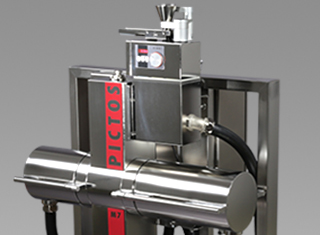
Fast and reliable characterisation of free-flowing products – for instance in quality control or production – is best realised with a QICPIC sensor in combination with gravity dispersion in the GRADIS free-fall shaft. Compared to the elaborate analysis with a sieve stack, this is an efficient and more meaningful option. Reproducible and statistically sound particle size distributions with high resolution are practically achieved in real-time. To enhance your product insights, image analysis additionally provides illustrative shape information.
The particle images captured by QICPIC are analysed using PAQXOS evaluation software. Various size and shape parameters can be determined for each detected particle and displayed as distributions for the entire sample or selected particle populations.
In addition to conventional particle size distributions, dynamic image analysis provides quantitative information on particle morphology.
Available size and shape parameters include:
- Equivalent diameter
- Length and width
- Aspect ratio
- Sphericity
- Convexity
- Fibre length and diameter
- Fibre straightness and elongation
This allows particle detection is the foundation for robust analytical results. QICPIC captures high-quality images of individual particle projections with clearly defined contours.
The enhanced image analysis supports precise segmentation, enabling detailed characterisation of more complex particle systems.
Particle images are also available for visual assessment of the sample, allowing statistical results to be directly related to the captured particle projections.